


Key Takeaways
- Meibomian glands line your eyelids and help keep your tear film stable.
- Clogged glands can cause dry, gritty, or watery eyes.
- Warm compresses and eyelid cleaning can help at home.
- Relief from at-home routines may take several weeks.
- Persistent symptoms call for professional dry eye treatment.
- In-office options like intense pulsed light (IPL) therapy can help clear stubborn blockages.
Many people live with a lingering sense of dryness and irritation that seems to persist no matter how much they blink. It is easy to dismiss this discomfort as temporary eye fatigue, but when it becomes a daily occurrence, it often signals that your eyes are struggling to maintain a healthy moisture balance. The culprit frequently lies in the meibomian glands, located along the edges of your eyelids.
Fortunately, you can often address these blockages by consistently incorporating targeted heat and maintenance into your daily routine. Littlefield Eye Associates has helped Kansas City patients identify and treat these underlying blockages for years, moving beyond temporary comfort to provide lasting relief.
Signs Your Meibomian Glands Are Clogged
Meibomian gland dysfunction, or MGD, doesn’t always feel like what most people picture as dry eye. The symptoms can be easy to brush off as allergies or tiredness, but they tend to stick around. MGD develops when the oil glands along your eyelids become blocked or produce poor-quality secretions, and the effects build gradually over time. Symptoms can include:
- A gritty or sandy feeling, like something is in your eye
- Burning or stinging that gets worse toward the end of the day
- Puffy or swollen eyelid edges
- Blurry vision that clears up when you blink
- Watery eyes, which actually signals the eye is overcompensating for dryness
- Discomfort or intolerance when wearing contact lenses
Who Is at a Higher Risk?
Some people are more likely to deal with blocked meibomian glands than others.
- Age-related hormonal shifts can thicken the gland oil, making it harder to flow freely.
- Heavy screen use is another factor, since staring at a screen reduces how often you blink, and fewer blinks mean less oil is expressed from the glands.
- Contact lens wearers and people with seasonal allergies also tend to see MGD more often.
At-Home Steps to Help Clear Clogged Glands
Heat Therapy
Heat is the foundation of any at-home MGD routine. Warmth softens the thickened oil inside the glands so it can flow again. The key is using consistent, even heat for at least 10 minutes.
Skip the wet washcloth. It cools down too fast to do much good. A microwaveable dry eye mask holds heat longer and wraps around your eye contours more evenly, giving the glands enough time to respond. Warm compresses work by unclogging oil glands and increasing moisture along the eyelid, and using one once or twice a day gives you a steady chance at improvement.
Gentle Massage and Eyelid Cleaning
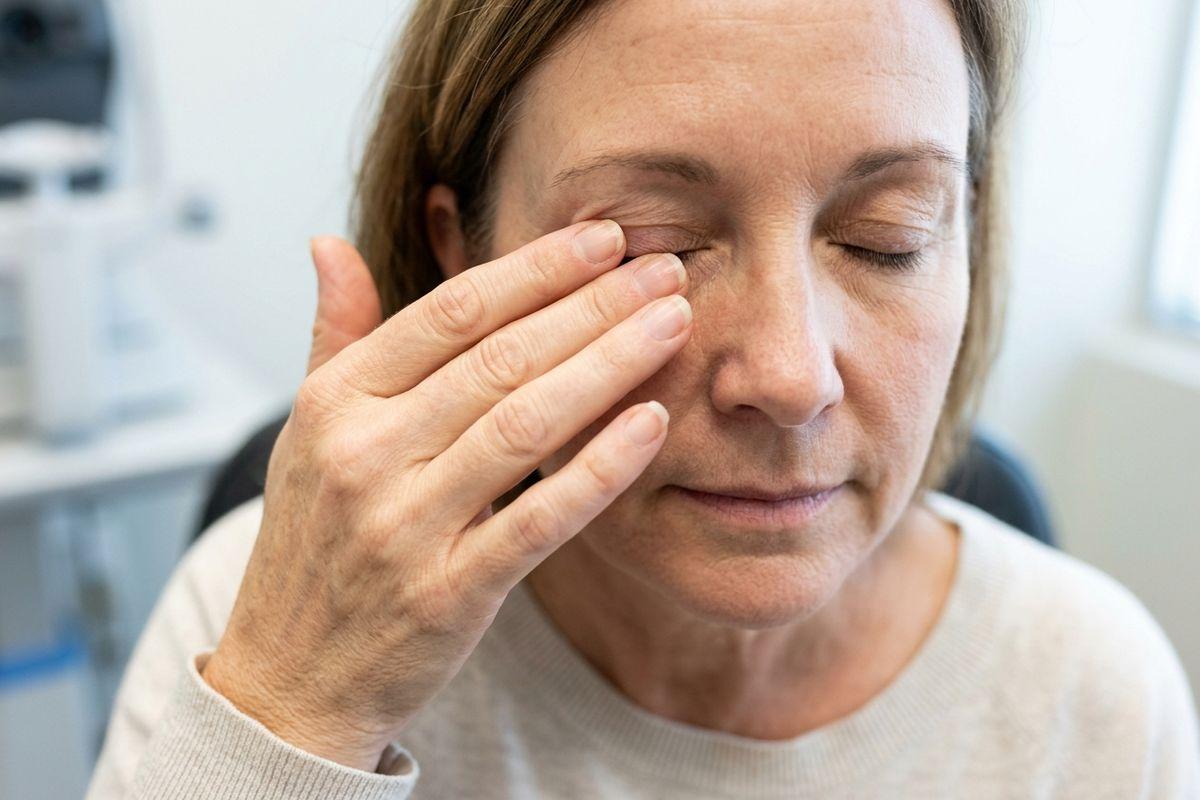
Right after the warm compress, while the oil is still soft, use light fingertip pressure to gently massage along the eyelid edges (make sure to wash your hands before). This helps push the loosened oil out of the glands. Don’t press hard. The goal is gentle, steady pressure, not squeezing.
Follow that up with eyelid cleaning. A mild soap or diluted baby shampoo along the lash line helps remove buildup that can clog the gland openings. This step keeps the area clean and reduces the chance of irritation setting in again.
When to See an Eye Doctor
At-home routines take time. Most people need several weeks of consistent effort before they notice real relief. That’s not necessarily a sign that something is wrong. It may just mean the glands need repeated warming and clearing to get back to functioning regularly.
If your symptoms don’t improve after a few weeks, or if they’re getting worse, that’s a clear signal to see an eye doctor. Untreated MGD can eventually affect the cornea, the clear front surface of your eye, and that can affect your vision in lasting ways. Catching it early can make a real difference in how manageable it stays. Dry eye disease is often more involved than it first appears, and a thorough eye exam can help identify exactly what’s driving your symptoms.
Professional Treatments for Stubborn Blockages
In-Office Options
When at-home care isn’t enough, our team at Littlefield Eye Associates offers in-office dry eye treatments that go deeper than any home routine can reach:
- IPL therapy uses gentle pulses of light to reduce inflammation around the eyelid glands and improve oil flow over time.
- Prescription eye drops may be recommended to help improve tear production, reduce inflammation, or support a healthier tear film.
- Manual gland expression allows the eye doctor to directly remove hardened buildup that’s blocking the gland openings.
Everyday Habits That Support Gland Health
Treatment works better when your daily habits support it. Two small changes can make a noticeable difference over time.
First, try the 20-20-20 rule during screen time: every 20 minutes, look at something 20 feet away for 20 seconds. This gives your eyes a chance to blink fully and express oil naturally.
Second, adding omega-3-rich foods like salmon, walnuts, or flaxseed to your diet can help improve the quality of the oil your glands produce.
Consistent small habits, paired with the right treatment, give your glands a stronger chance to stay clear and comfortable.
We Can Help
Our team at Littlefield Eye Associates in Kansas City has been caring for patients with dry eye and MGD for years, offering personalized treatment plans that fit your lifestyle. If your eyes have been feeling off and nothing seems to help, schedule an eye exam in Kansas City, MO, and get a clear picture of what’s going on.